
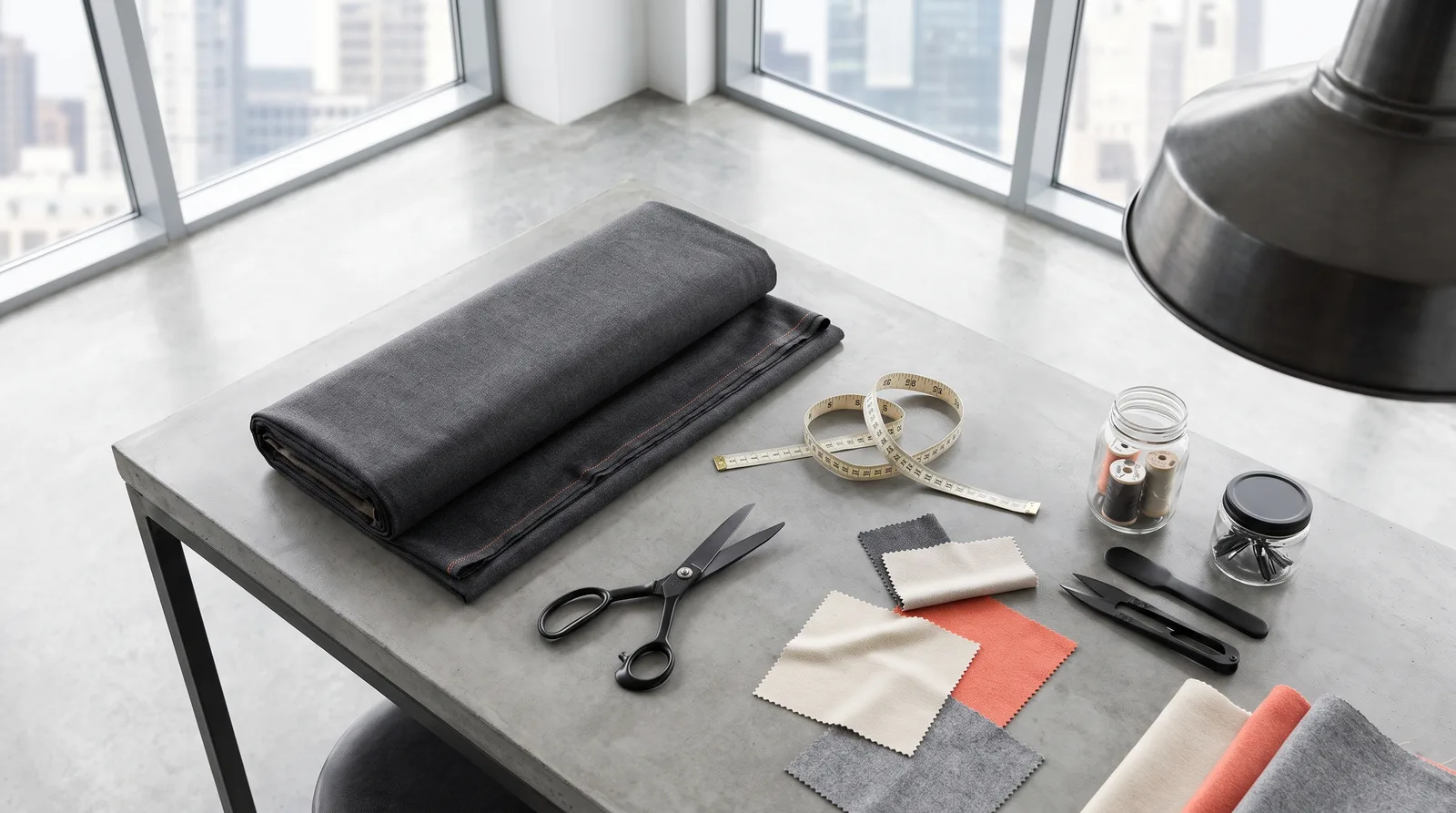
There's a moment, looking at a price tag, when a low price feels like a bargain and almost never like a problem. Seven euros for a t-shirt, fifteen for a pair of trousers: the question rarely asked is how it got that cheap. A garment is fabric, hours of labour, steps along a chain — and every one of those carries a real cost, paid by someone even when it never shows up on the final price.
Three line items, not one
The price of a garment breaks down, roughly, into three blocks: material (fabric, lining, buttons, zips, labels), manufacturing (the hours spent cutting, sewing, finishing) and everything that comes after — shipping, warehousing, retail negotiations, marketing, returns, unsold stock. The first block is almost always visible: you can feel the quality of a fabric with your hands. The second is less visible, because it leaves no trace on the label. The third, often the biggest of the three, is the one buyers almost never see — yet it's what really decides how much is left for whoever actually made the garment.
Labour costs differently, depending on where it's sewn
Eurostat doesn't break labour costs down for the textile and clothing sector alone, but the figure for the economy as a whole is enough to show the gap: in 2024, hourly labour costs across the EU ranged from €10.6 in Bulgaria to €55.2 in Luxembourg, with an EU average of €33.5 and a euro-area average of €37.3. A gap of that size, applied to a trade built on hours — cutting, sewing, finishing, checking — explains on its own why the same shirt, with the same fabric and the same pattern, can cost wildly different amounts depending on where it's put together. It isn't the only variable in the final price, but it's the easiest one to squeeze — and squeezing it always has a name and an address, even when neither shows up on the tag.
In Italy, the supply chain runs on small makers
Italy's fashion supply chain counts around 56,000 companies, according to the latest structural picture from ISTAT, the national statistics institute: a fabric made overwhelmingly of small and very small businesses, which weigh heavily in numbers and far less in overall value added. Large companies, those with over 250 employees, are just 0.2% of the total yet capture 27.6% of the supply chain's value added — a concentration that leaves the smallest players a much thinner slice to split among many. To stay competitive, small makers often offset lower productivity with lower labour costs: the margin narrows, it doesn't widen. That's where you really see who's paying to keep the price down — more than in the number on the shop window.
The account we choose to settle
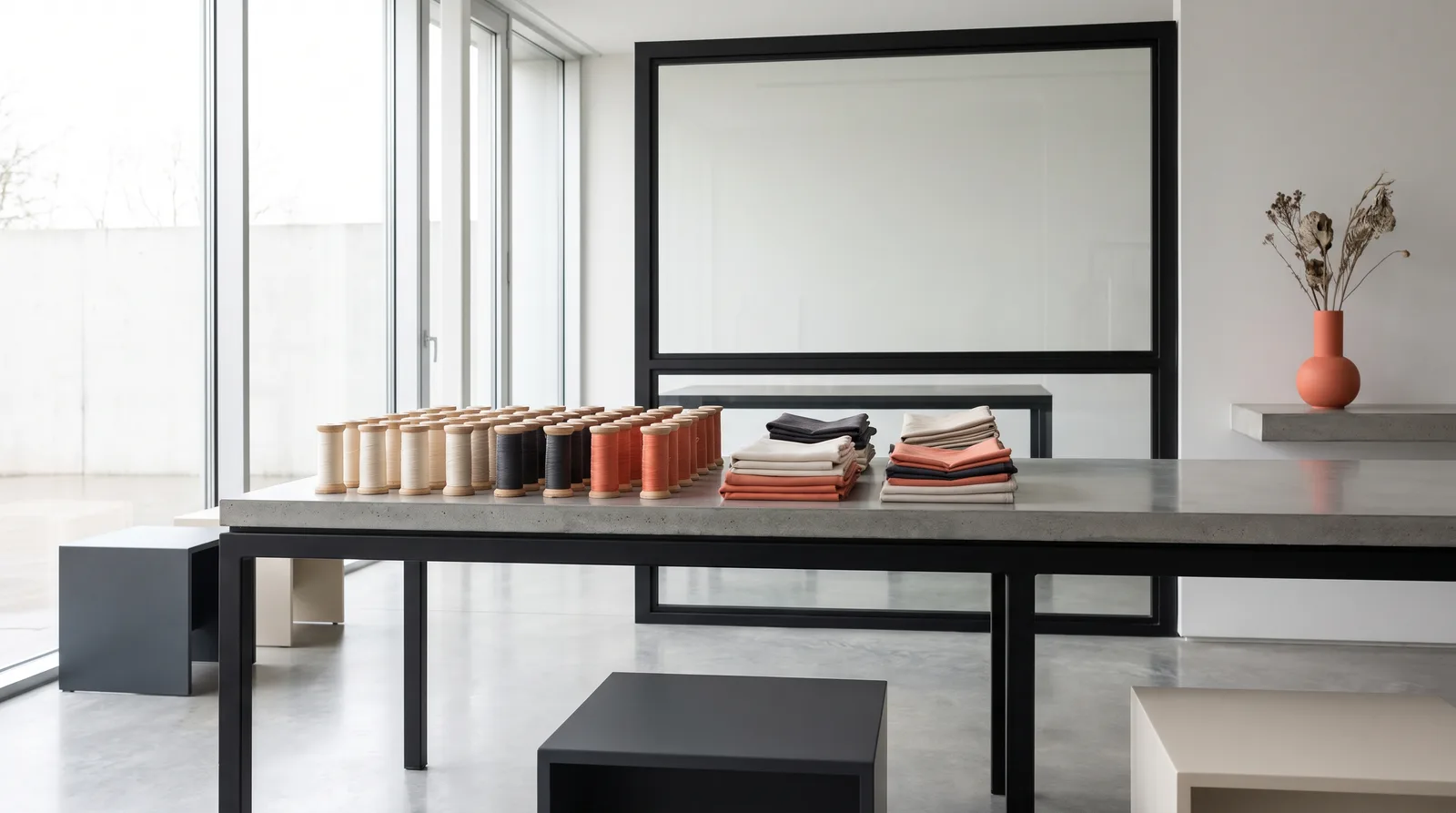
We don't claim to know the exact margin on every garment sold elsewhere, but we know how ours breaks down: what the fabric costs, how many hours it takes to cut and sew it, what's left for whoever actually makes it. In our facility in Cologno al Serio, near Bergamo, we develop patterns, cut, sew and press under one roof since 1979: a price that holds up under that account all the way through, not one that hides it from someone along the chain.