

Textile microplastics are a real subject, and an easy one to inflate. The truth sits in between: fabrics shed fibres, synthetics shed fibres that do not break down, and a good deal can be done without giving anything up.
What comes off, and when
Every fabric releases tiny fragments when washed. Fibres rub against each other and against the drum. In synthetics such as polyester, nylon and acrylic those fragments are plastic, and they leave with the waste water.
How much depends on many things: the yarn, how the fabric is built, the age of the garment, the wash programme. Figures in circulation vary widely from study to study, because measuring methods are not yet uniform. That is why we give none here: no number beats a number that does not hold.
Natural fibres: less of a problem, not none
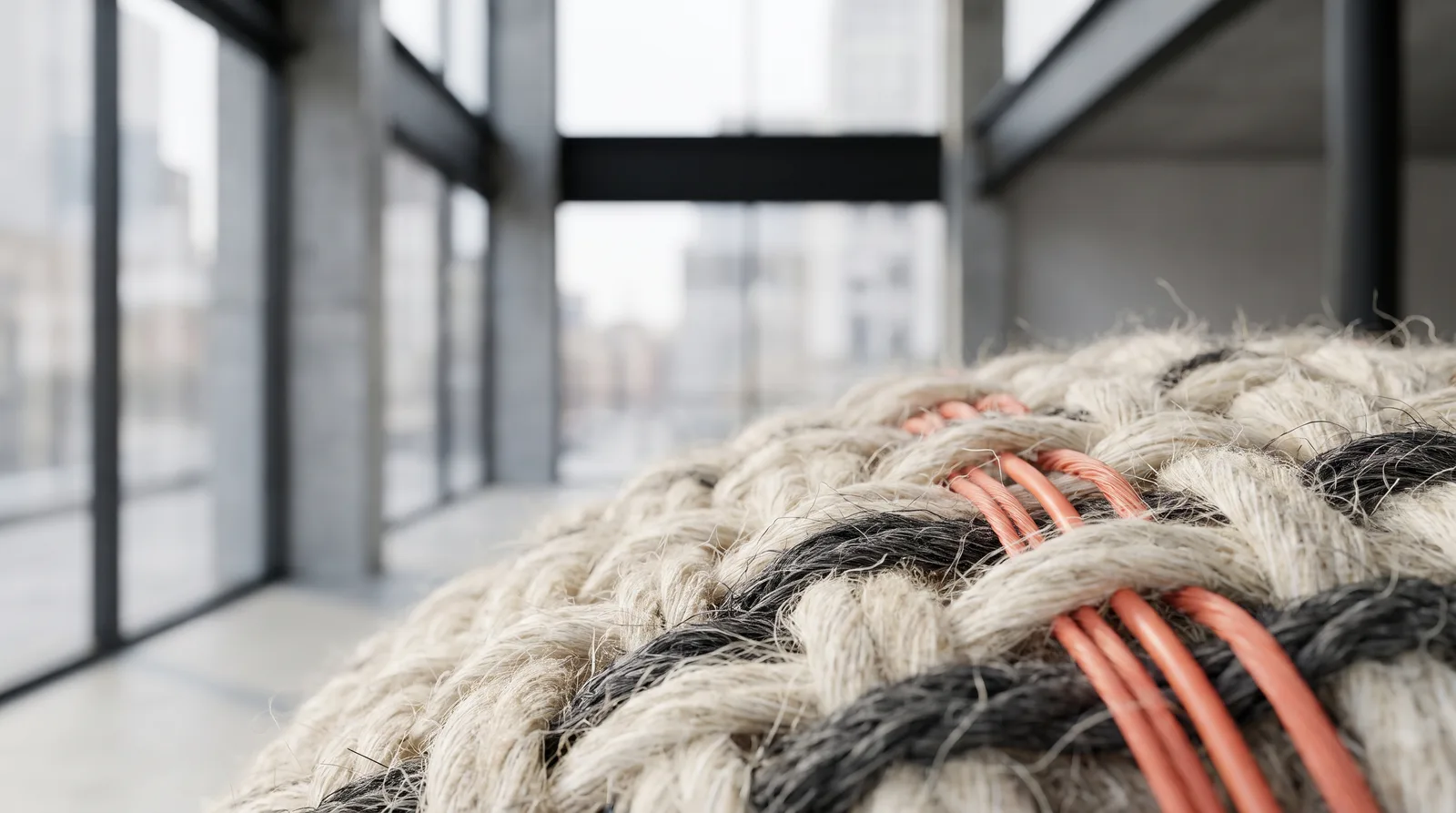
Cotton, linen and wool shed too. The difference lies in what the fragment is: cellulose and keratin are organic matter and, under normal conditions, they degrade. It is not a blanket pass. Dyes and finishes matter, and a blend carries the behaviour of its synthetic part.
The practical rule is simple: the clearer the composition and the more natural the fibre, the fewer unknowns. A well-made linen or merino piece is washed rarely and lasts for years, and that counts as much as the fibre itself.
Habits that shrink the problem
Washing less often, and with a full load, means less friction. A lower temperature and a gentle cycle do the same. Air a garment before it goes in the machine, and let it dry in the open air rather than in a dryer, which works it harder still.
Bags and filters exist that catch part of the fibres. They work to different degrees and must be emptied properly. They help; they are not a solution.
And the rules?
In Europe the subject is on the table. According to an analysis by the Pew Charitable Trusts, the Ecodesign for Sustainable Products Regulation (ESPR) is the tool being used to develop requirements for textiles, including fibre release. There is no final rule yet: the framework is still being built, and deserves a careful eye.
Meanwhile the choice stays with those who design, make and buy. Fibres chosen with care, garments built to last, fewer washes: that is the most concrete way to do your part.
For us this is everyday work: at our site in Cologno al Serio, in the province of Bergamo, we have been making garments since 1979 that are built to be washed little and worn long, with clear compositions and finishes made to last. Less shedding starts with a well-made garment.